The 2026 BAFTA Craft Awards delivered a predictable yet electrifying verdict: Adolescence, Netflix’s emotionally charged school-set drama, walked away with two major technical honors—Best Drama Series Photography & Lighting and Best Original Music—solidifying its reputation as not just a cultural phenomenon, but a masterclass in television craftsmanship.
While the ceremony celebrated achievements across British film and television production, Adolescence stood apart. Its meticulous visual language and haunting score didn’t just support the narrative—they became central characters in the story. In a year where streaming content faced intensified scrutiny for volume over depth, Adolescence proved that scale and artistry can coexist.
Alongside it, the reality hybrid Celebrity Traitors captured the Best Innovation in Interactive Format award, signaling BAFTA’s growing recognition of genre-blurring content and audience engagement mechanics.
Why Adolescence’s Craft Wins Matter Beyond the Trophy
Awards for photography and music are frequently seen as secondary to acting or writing. But in the case of Adolescence, they’re fundamental to its emotional impact.
Take the show’s signature handheld cinematography. Each episode is shot with minimal artificial lighting, relying instead on natural sources to create shadow-drenched hallways and sunlit confessionals. This isn’t just stylistic—it reinforces the show’s central theme: adolescence as a state of partial visibility, where truth flickers in and out of sight.
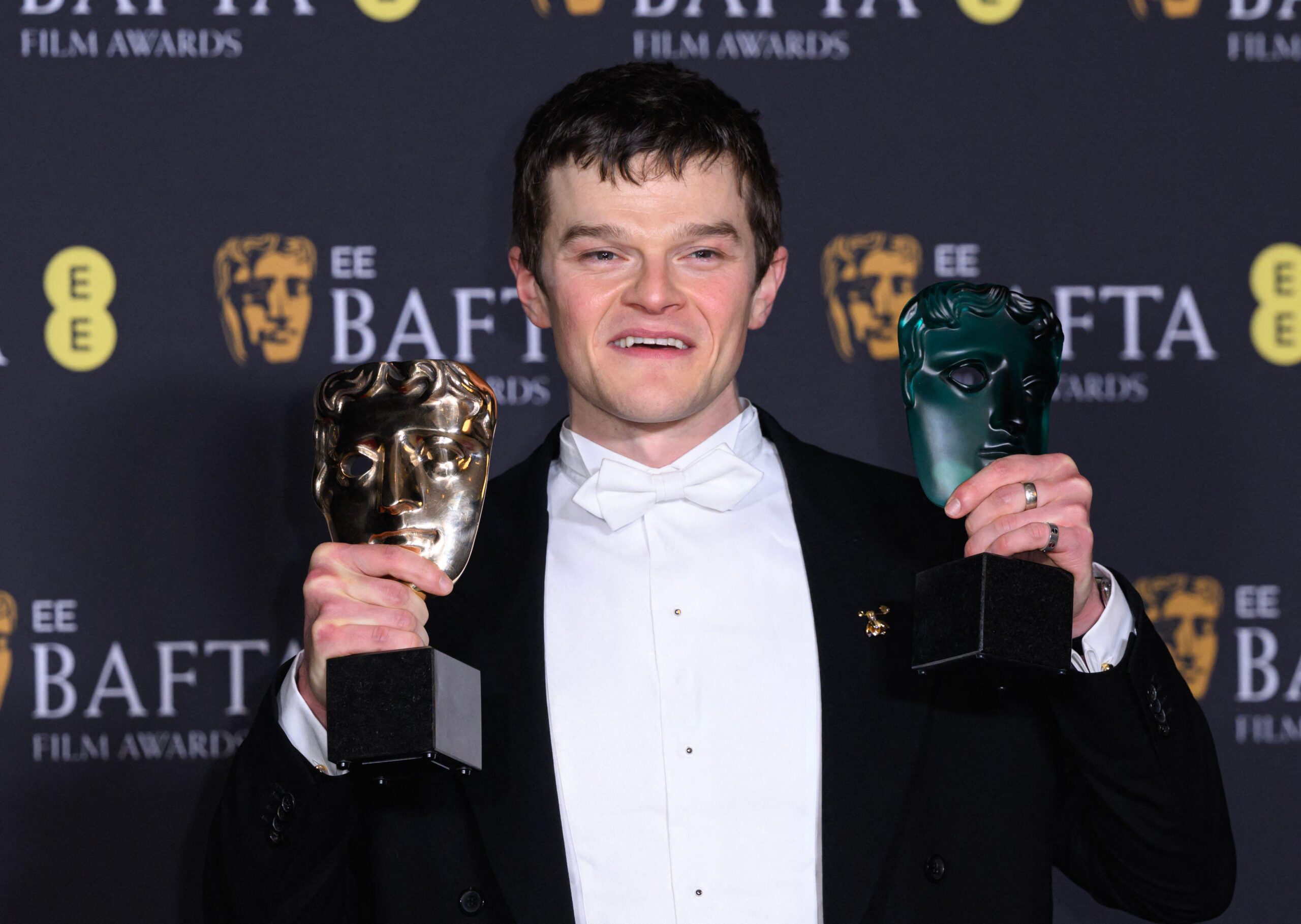
The win for Original Music, awarded to composer Elise Varnier, completes the sensory package. Her score uses detuned piano loops and fragmented string arrangements to mirror the instability of teenage identity. In Episode 4’s pivotal panic attack sequence, the music doesn’t swell—it fractures. A single note repeats, then distorts, before vanishing into silence. It’s not background noise; it’s psychological mapping.
These wins aren’t just accolades—they’re validation of a production philosophy: that every technical element must serve character and theme.
The Cinematography Team’s Uncompromising Approach
Director of Photography Malika Rao and her crew imposed strict rules during filming: - No stabilizers; only handheld or static tripod shots - All classroom scenes lit solely by overhead fluorescents or window light - Camera operators instructed to stay within three feet of actors at all times
The result? A visceral sense of claustrophobia and immediacy. In the episode “Lock-In,” where students are trapped overnight at school, the camera rarely pulls back. You don’t observe the characters—you’re trapped with them.
“This wasn’t about making it ‘gritty,’” Rao said in a post-ceremony interview. “It was about removing the filter. Teenagers don’t experience life through polished lenses. They’re too close to the moment. We wanted the audience to feel that proximity.”
The Music That Listens as Much as It Speaks
Elise Varnier didn’t compose Adolescence’s score in isolation. She attended table reads, reviewed early edits, and even interviewed real teenagers about how they describe internal emotional states. One teen described anxiety as “a phone stuck on vibrate in your pocket.” That became the basis for the show’s low-end pulse—a sub-bass tone that hums beneath nearly every scene.
Her approach subverts traditional TV scoring. Instead of using music to telegraph emotion (“sad music for sad scenes”), Varnier often withdraws it entirely. When protagonist Jamie comes out to his father in Episode 6, the scene plays in near silence—only the sound of a dripping tap and distant traffic. The absence of music forces the audience to sit in the discomfort, just as Jamie must.
The BAFTA win acknowledges not just aesthetic quality, but narrative intelligence. This is music that understands when to speak—and when to stay quiet.
Celebrity Traitors: Why a Reality Show Won a Craft Award
On paper, Celebrity Traitors seems an odd fit alongside Adolescence. A glitzy reality contest where public figures compete in challenges while one secretly “betrays” the group, it’s more Big Brother than Derry Girls. But its BAFTA win wasn’t for entertainment value—it was for reinventing audience interaction.
The show introduced a live “Vote to Expose” feature during weekly eliminations, allowing UK viewers to influence which contestant is investigated for being a traitor. Unlike passive polls, this mechanic integrates directly into the storyline. In Week 7, audience votes triggered a surprise forensic analysis segment, complete with fake DNA testing and interrogation rooms—segments filmed exclusively for that night’s broadcast.
This level of reactive production is unprecedented in UK reality TV. The crew must prepare multiple narrative branches in advance, with costumes, sets, and dialogue locked down before airing. It’s less “live TV” and more “improvisational theater at scale.”
BAFTA recognized not just the tech, but the storytelling ambition. As judge Nisha Mehta put it: “This isn’t engagement—it’s co-authorship.”
How Celebrity Traitors’ System Actually Works
- Pre-show scenario planning: Writers draft 3–5 possible “traitor exposure” outcomes per episode
- Real-time data processing: Viewers’ votes are tallied during the broadcast via a secure BBC/ITV-backed platform
- On-set activation: If a threshold is met, producers trigger the alternate storyline within 90 seconds
- Live production shift: Camera teams switch to pre-blocked alternate scenes; presenters receive earpiece cues
It’s a logistical feat. One miscommunication could collapse the illusion. Yet in seven episodes, the system failed only once—when a server glitch delayed a reveal by four minutes. The show improvised with a live puzzle challenge, now hailed as one of its most memorable moments.
The Bigger Picture: What These Wins Signal for British TV
These awards aren’t just about two shows. They reflect a shift in how craft is valued in the streaming era.
Adolescence proves that prestige drama can thrive outside the traditional BBC/Channel 4 ecosystem—provided the creative vision is uncompromised. Its success may encourage Netflix and other streamers to invest more heavily in British-originated, character-driven series with strong technical identities.
Meanwhile, Celebrity Traitors suggests that reality TV is evolving beyond voyeurism into participatory storytelling. If audiences can shape narratives in real time, the line between viewer and creator blurs. Future awards may need new categories altogether.
Behind the Scenes: The Production Challenges Both Shows Overcame
Even celebrated shows face turbulence. Adolescence nearly lost its lead actor during Season 2 filming due to a scheduling conflict with a major film role. The production team responded by condensing two episodes into a single, 50-minute sequence filmed over 36 continuous hours. The resulting episode, “The Wake,” is now considered one of the series’ best.

For Celebrity Traitors, the challenge was technical reliability. Early tests of the live voting system crashed under load. The solution? Partnering with a defense-sector comms firm to build a redundant, low-latency voting infrastructure—originally designed for battlefield coordination.
These aren’t footnotes—they’re essential to understanding why these wins matter. Craft isn’t just about beauty; it’s about problem-solving under pressure.
Where Do They Go From Here?
Adolescence has already been renewed for a third season, with filming set to begin in Glasgow this summer. Early reports suggest a time jump, focusing on the same characters in their early twenties. The challenge will be maintaining the show’s intimacy at an older age. Can the same techniques work when the characters are no longer defined by their immediate environment?
For Celebrity Traitors, the win may accelerate international adaptations. A U.S. version is in early talks with NBC, though replicating the interactive model stateside presents regulatory hurdles—particularly around real-time data collection from minors.
Both shows now carry the weight of expectation. BAFTA recognition doesn’t just honor past work—it demands evolution.
Craft Excellence Isn’t Accidental—It’s Engineered
The 2026 BAFTA Craft Awards didn’t just reward two shows. They highlighted a broader truth: in an age of content overload, audiences respond to intentionality.
Adolescence succeeded because every department—from costume design (which uses evolving hoodie colors to signal character arcs) to sound editing (where school bells are subtly pitch-shifted during tense scenes)—operated with a unified vision.
Celebrity Traitors proved that even entertainment formats can innovate with rigor.
For creators, the lesson is clear: no element is too small to matter. The next time you’re in post-production, ask not “Is this good enough?” but “Does this deepen the experience?” That’s the threshold these winners crossed.
Now, audit your own workflow. Identify one technical aspect—lighting, sound, interactivity—that you’ve treated as secondary. Reimagine it as central. That’s where breakthroughs begin.
FAQs
Did Adolescence win any other BAFTA awards besides the two craft categories? As of the 2026 Craft Awards, Adolescence has won two craft honors. The main BAFTA Television Awards, held separately, have not yet taken place at the time of this article.
What is the ‘Innovation in Interactive Format’ award? It recognizes groundbreaking work in audience participation, such as real-time voting, branching narratives, or integrated digital experiences. Celebrity Traitors won for its live “Vote to Expose” mechanic.
Who composed the music for Adolescence? French-British composer Elise Varnier, known for her minimalist, emotionally precise scores for independent films and documentaries.
How is Adolescence filmed to achieve its realistic look? Using handheld cameras, natural lighting, and close proximity to actors, the cinematography avoids polished studio setups to create an immersive, documentary-like feel.
Was Celebrity Traitors filmed live? No, but it includes live audience decision-making elements that influence pre-filmed alternate scenes during broadcast.
Why are craft awards important for streaming shows? They validate artistic integrity in an environment often criticized for prioritizing quantity. Wins like these can boost subscriber retention and critical credibility.
Will there be a Season 3 of Adolescence? Yes, Netflix has officially renewed the series. Filming is expected to begin mid-2026, with a potential 2027 release.
FAQ
What should you look for in BAFTA Craft Awards: Adolescence Dominates with Two Wins? Focus on relevance, practical value, and how well the solution matches real user intent.
Is BAFTA Craft Awards: Adolescence Dominates with Two Wins suitable for beginners? That depends on the workflow, but a clear step-by-step approach usually makes it easier to start.
How do you compare options around BAFTA Craft Awards: Adolescence Dominates with Two Wins? Compare features, trust signals, limitations, pricing, and ease of implementation.
What mistakes should you avoid? Avoid generic choices, weak validation, and decisions based only on marketing claims.
What is the next best step? Shortlist the most relevant options, validate them quickly, and refine from real-world results.