Every year, dozens of workers suffer severe injuries—or worse—because machinery was accidentally re-energized during maintenance. These tragedies are preventable. Lockout tagout safety procedures exist precisely to stop uncontrolled energy release from machinery. Yet, despite clear OSHA regulations and decades of awareness, violations remain common. Why? Because too often, LOTO is treated as a box-checking exercise rather than a life-preserving protocol.
True safety begins not with policy, but with consistent, correct execution. This guide breaks down the critical components of effective lockout tagout safety procedures—what they are, how to implement them, and where most facilities fall short.
What Are Lockout Tagout Safety Procedures?
Lockout tagout (LOTO) refers to a set of systematic steps used to disable machinery or equipment to prevent the release of hazardous energy during servicing or maintenance. At its core, LOTO is an energy control procedure that ensures machines are completely shut down and cannot be restarted until maintenance is complete.
The two main elements are: - Lockout: Physically locking the energy-isolating device (like a breaker or valve) with a worker-specific lock. - Tagout: Attaching a warning tag that identifies the worker, the reason for shutdown, and the time.
While tagout alone is permitted in some cases, lockout is required when feasible—it provides a physical barrier to re-energization. Together, they form a layered defense against electrocution, crushing, amputation, and other high-risk incidents.
Why LOTO Procedures Are Non-Negotiable
Energy doesn’t discriminate. Whether it’s electrical, pneumatic, hydraulic, chemical, or gravitational, stored energy can activate machinery without warning. Consider this: a conveyor belt powered down but not locked out can restart from residual pressure or an automated signal. The result? A technician caught in moving parts.
OSHA standard 29 CFR 1910.147 outlines the legal framework for LOTO in general industry. Failure to comply isn’t just risky—it’s costly. OSHA routinely issues fines exceeding $10,000 per violation, especially for willful or repeated failures.
But beyond fines and compliance, LOTO is about respect for human life. The most effective safety cultures don’t enforce procedures—they embed them into daily behavior.
The 6-Step Lockout Tagout Safety Procedure
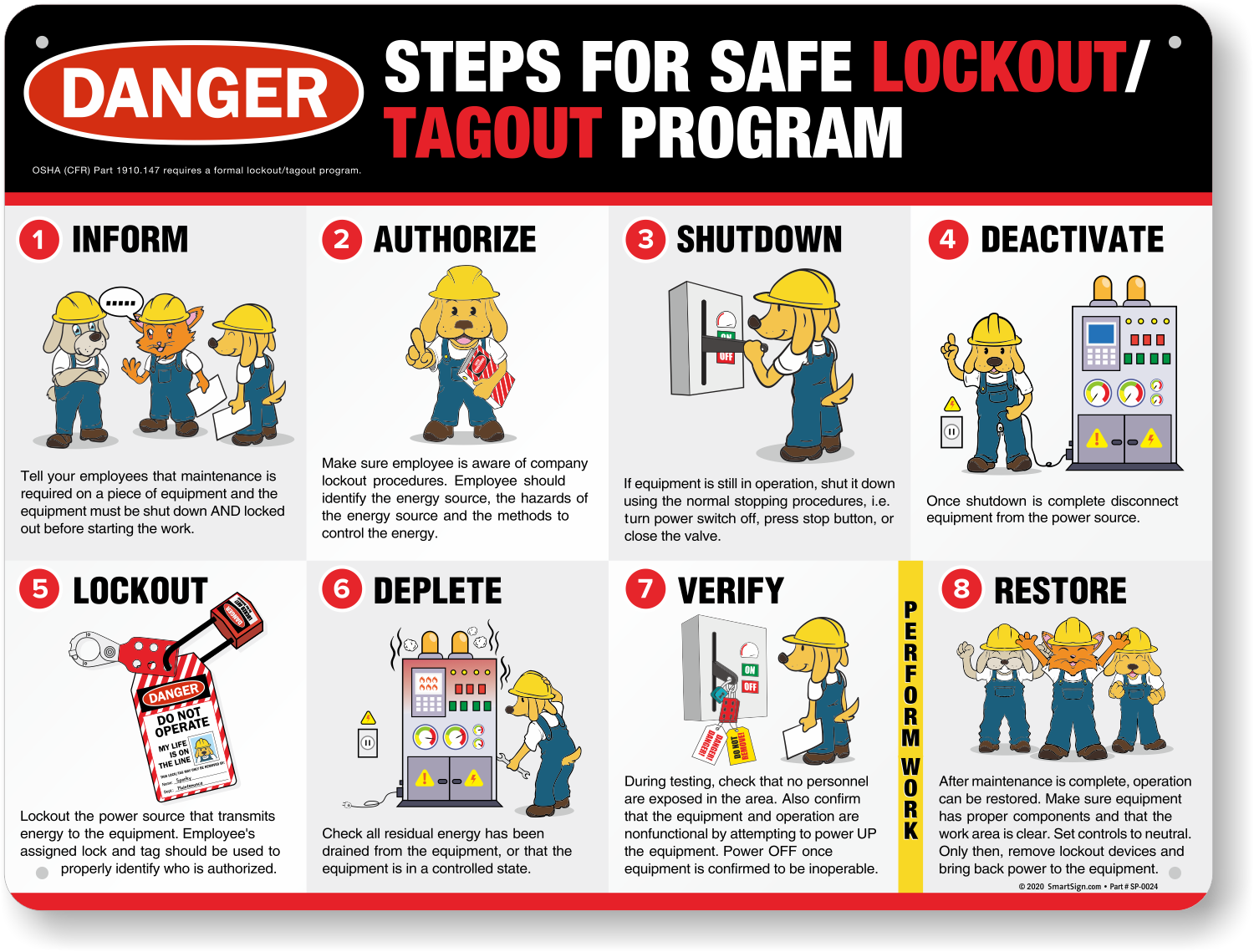
Following a standardized sequence is essential. Deviations introduce failure points. Here’s the universally accepted six-step LOTO process:
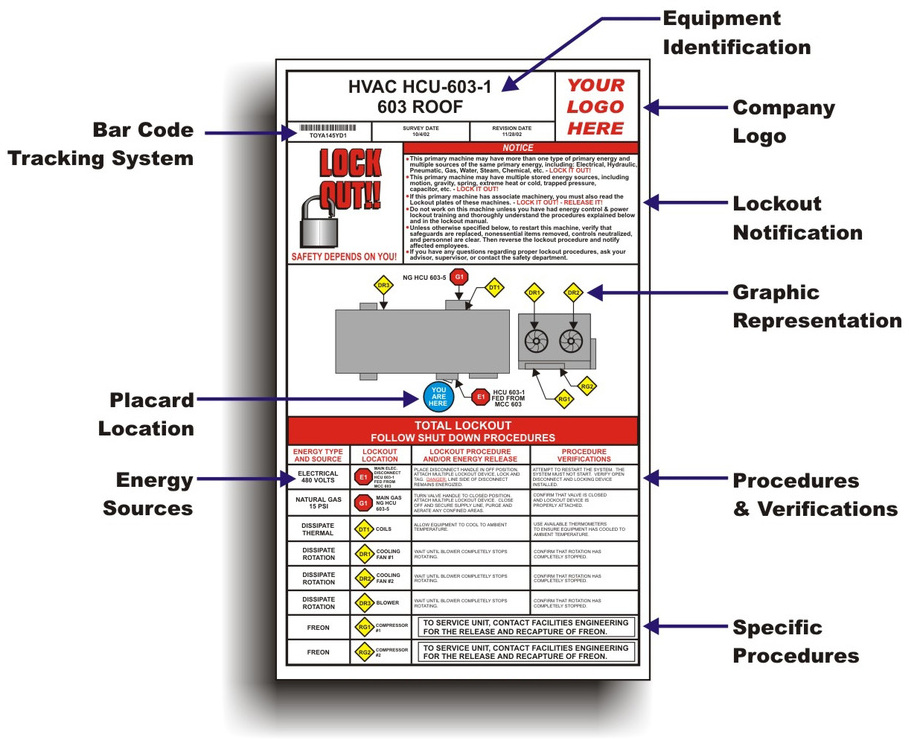
#### 1. Preparation Before any work begins, the authorized employee must identify: - All energy sources powering the equipment - The type and magnitude of energy (e.g., 480V electrical, 120 psi hydraulic) - Applicable isolation points (circuit breakers, disconnect switches, block valves)
This step requires up-to-date equipment schematics and training. Skipping prep leads to missing hidden energy sources—like a secondary air line or capacitor bank.
#### 2. Notification Inform all affected employees that shutdown and LOTO are about to occur. This includes operators, supervisors, and nearby personnel. Clear communication prevents someone from unknowingly attempting to restart equipment.

#### 3. Shutdown Operate the normal stopping procedure. Use control buttons or switches to power down the machine. Never assume shutdown equals zero energy.
#### 4. Isolation Physically disconnect all energy sources. This may involve: - Opening circuit breakers - Closing block valves - Bleeding lines - Blocking moving parts
Each isolation point must be controlled with a lockout device.
#### 5. Application of Locks and Tags Each authorized worker applies their personal lock and tag to every energy-isolating device. Group lockout boxes are used when multiple workers are involved. The tag must include: - Employee name - Date and time - Reason for lockout
No shared locks. No master keys. Each worker controls their own lock removal.
#### 6. Verification of Isolation This is the most critical—and most overlooked—step. Before beginning work, the authorized employee must verify that zero energy conditions exist.
How? - Try to restart the machine using normal controls (after ensuring no one is in harm’s way) - Use voltage testers, pressure gauges, or other diagnostic tools - Visually confirm blades aren’t spinning, lines aren’t pressurized
If energy is detected, the process restarts from step four.
Common LOTO Mistakes That Lead to Accidents
Even facilities with written LOTO programs fail in execution. Here are the most frequent errors:
1. Using tagout without lockout when lockout is feasible Tags can be ignored or removed. Locks physically prevent activation. If a lock can be installed, it must be.
2. Incomplete energy source identification A lathe might be electrically isolated, but if it has a hydraulic clamping system, that energy must also be bled and locked.
3. Skipping verification Assuming the machine is de-energized without testing is a recipe for disaster. One missed capacitor can be fatal.
4. Group lockout without proper coordination In team maintenance, a group lockbox must be used. Each worker places their lock on the box, which holds the key to the main disconnect. Removing the last lock doesn’t mean it’s safe—every worker must confirm completion.
5. Using master or override keys These defeat the purpose of individual control. OSHA allows them only in specific, documented situations (like shift changes), and even then, with strict procedures.
6. Inadequate training Affected employees must understand why LOTO matters and what to do if they see a tagged machine. Authorized employees need hands-on practice.
Real-World LOTO Use Cases and Examples
Case 1: Conveyor Belt Replacement A maintenance team replaces rollers on a production line conveyor. They shut it down, lock the main disconnect, and tag it. But they forget the tensioning system, which uses spring energy. When a technician adjusts the frame, the spring releases, crushing their hand. Lesson: All energy sources—not just primary ones—must be controlled.
Case 2: Night Shift Override A supervisor removes a worker’s lock because “the line needs to run.” The worker is still inside the machine. Restarting causes severe injury. Lesson: Only the person who applied the lock can remove it—no exceptions.
Case 3: Temporary Testing During repair, a machine must be briefly energized to test functionality. The team follows a “limited re-energization” protocol: clear the area, use a designated operator, reapply locks immediately. Lesson: Temporary energization is allowed but requires a formal, documented sub-procedure.
Required LOTO Equipment and Devices
Effective lockout depends on proper tools. Facilities must provide:
| Device | Purpose | Example Use |
|---|---|---|
| Lockout hasps | Allow multiple locks on a single isolation point | Circuit breaker disconnect |
| Valve locks | Prevent valve operation | Air, steam, or fluid lines |
| Circuit breaker locks | Secure breakers in off position | Electrical panels |
| Padlocks | Personal control of isolation | Each worker uses their own |
| Lockout stations | Centralized storage for devices | Maintenance bays |
All locks must be: - Durable - Standardized (same color/style per site) - Identifiable (e.g., engraved with worker name) - Non-releasable under tension
Tags must be durable, legible, and include warning language like “Do Not Operate—Men at Work.”
Training and Compliance: Building a LOTO Culture
A LOTO program is only as strong as its weakest link. OSHA requires:
- Authorized employees: Trained in energy control procedures, including shutdown, isolation, lock application, and verification. Retraining every 12 months or after procedure changes.
- Affected employees: Understand the purpose of LOTO and know not to operate locked-out equipment.
But compliance isn’t enough. Safety leaders must: - Conduct regular audits and observe real-world applications - Use real near-miss examples in safety meetings - Empower workers to stop work if LOTO isn’t followed - Review and update procedures when equipment changes
The goal isn’t to avoid OSHA fines. It’s to ensure every worker goes home unharmed.
Final Checklist: Is Your LOTO Procedure Effective?
Use this checklist to evaluate your current system:
✅ Are written procedures available for every machine? ✅ Do they include specific shutdown steps and energy sources? ✅ Are locks and tags readily available and in good condition? ✅ Is verification of zero energy required and documented? ✅ Are only authorized employees performing LOTO? ✅ Do affected workers understand their role? ✅ Is training documented and refreshed annually?
If any item is unchecked, your program has a vulnerability.
Lockout tagout safety procedures aren’t bureaucratic overhead—they’re the last line of defense between a technician and catastrophe. The machinery won’t wait. The energy won’t warn. But a disciplined, well-trained team can control both. Implement every step, correct every shortcut, and treat every lock as a promise: no one gets hurt on my watch.
Act now: Audit one machine’s LOTO procedure this week. Walk through each step. Test the isolation. Verify zero energy. If it fails, fix it before the next shift. Safety isn’t a policy. It’s a practice.
FAQ
What should you look for in Lockout Tagout Safety Procedures Every Worker Must Know? Focus on relevance, practical value, and how well the solution matches real user intent.
Is Lockout Tagout Safety Procedures Every Worker Must Know suitable for beginners? That depends on the workflow, but a clear step-by-step approach usually makes it easier to start.
How do you compare options around Lockout Tagout Safety Procedures Every Worker Must Know? Compare features, trust signals, limitations, pricing, and ease of implementation.
What mistakes should you avoid? Avoid generic choices, weak validation, and decisions based only on marketing claims.
What is the next best step? Shortlist the most relevant options, validate them quickly, and refine from real-world results.